How we moved from static census spreadsheets to dynamic, multi-dimensional vector maps to identify and serve underrepresented communities in football.
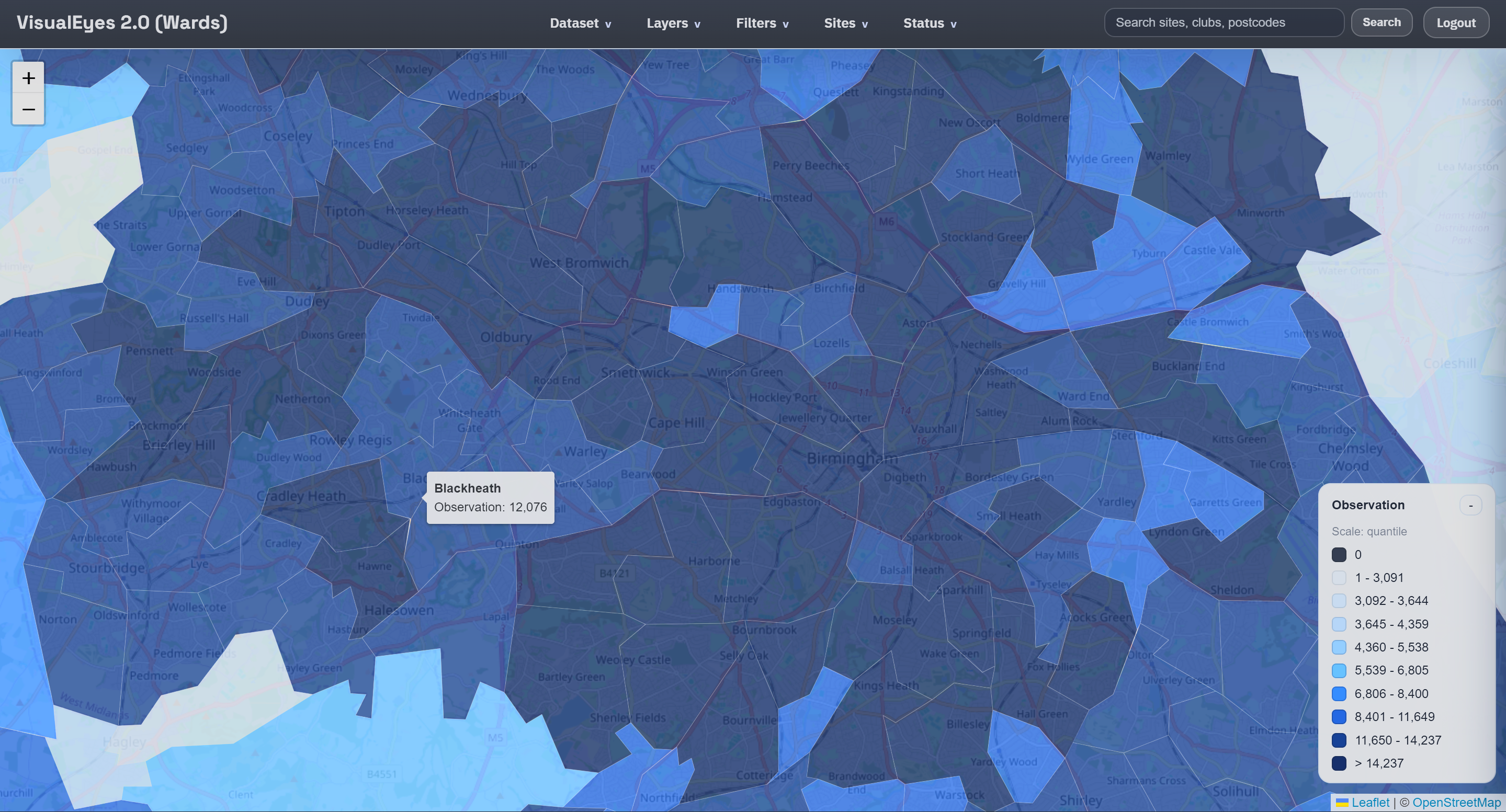
VisualEyes 2.0 Output
Ward-Level Ethnicity & Age Overlay
Why simple population counts weren't enough for strategic football development.
Historically, funding decisions were made using broad population averages. A "high population" area was assumed to need more facilities. However, this blunt approach ignored the nuance of participation.
To effectively grow the game, we needed to identify specific demographics:
Locating high concentrations of girls under 16 for "Wildcats" centers.
Supporting diverse communities with targeted inclusion programs.
Identifying areas with high disability rates to plan accessible sessions.
Connecting faith centers with football provisions.
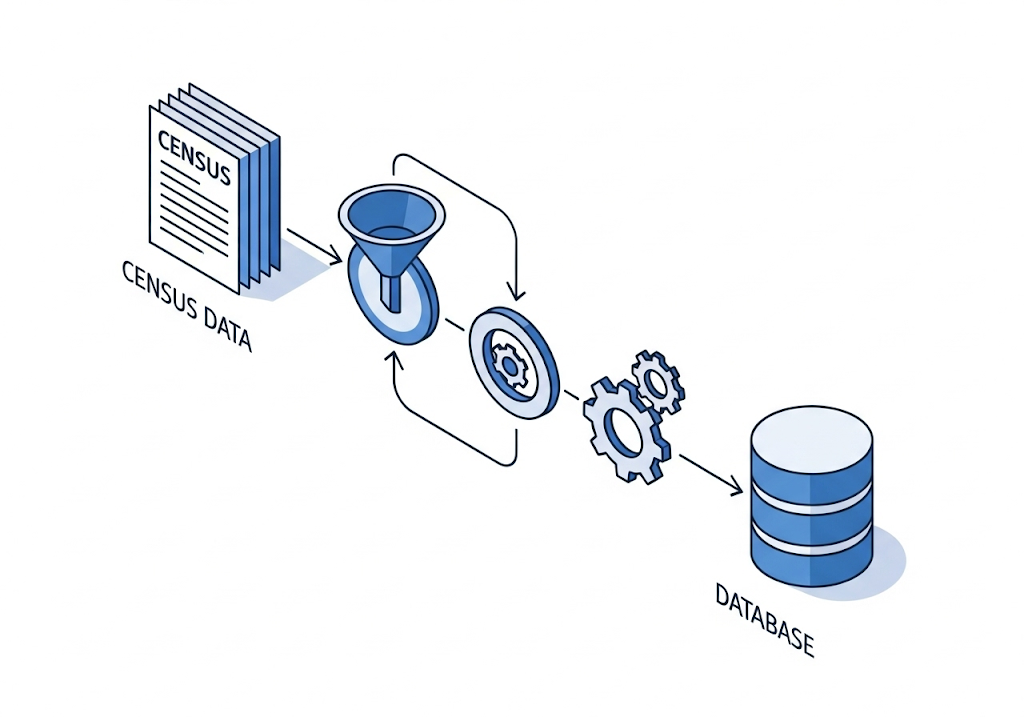
We moved beyond static spreadsheets by building a robust ETL (Extract, Transform, Load) pipeline using Python Pandas.
Raw bulk data from the ONS API was normalized to ensure consistent ward codes across 10+ datasets.
Using PostGIS, we spatially joined demographic data to Ward boundary polygons, creating a queryable vector layer.
Geometry simplification reduced load times, allowing the browser to render thousands of data points instantly.
From manual lookups to instant visual insights.
VisualEyes 2.0 has transformed the strategic planning process. By visualizing the invisible—the specific needs of local communities—we have successfully argued for targeted funding in areas previously overlooked by standard metrics.